Every man needs at least one good-quality, timeless pair of dress shoes in his wardrobe. They’ll create the foundation for any outfit you wear to a formal event, and last you for years — or even decades — if you invest in the right pair and look after them properly. However, with so many different styles on the market, it can be difficult to settle on a pair.
In this guide, you’ll find all the information you need to make the best possible decision. We’ll cover:
- What should I look for in a pair of dress shoes?
- How much should I spend on dress shoes?
- What colour shoes will work with your suit?
- The different types of men’s formal shoes
- How should I look after my dress shoes?
- How to lace up men’s dress shoes
- Terminology
Read on to find out more!
What should I look for in a pair of dress shoes?
If you want to get the most out of your money, there’s a lot you need to consider when picking out a new pair of dress shoes. Here’s everything you need to think about:
The quality of the leather
The best dress shoes are made from leather that is supple yet firm. Once broken in, they tend to be very comfortable, but will still hold their shape and look great for years. You get what you pay for when it comes to dress shoes, and this will show most prominently in the leather used to make them. So, if you’re in a position to do so, it’s always worth spending a little bit more.
There are four types of leather typically used in the manufacturing of dress shoes:
- Full grain is the best quality and has its original character and strength, as its surface isn’t sanded or buffed.
- Top grain is also often used to make high-quality leather goods, although it’s shaved to get rid of any blemishes and tends to be more stain resistant compared to full grain.
- Genuine leather comes next in terms of quality, and is usually a robust but more affordable option.
- Bonded leather is produced using a pulp made from shredded leather. It is then given a polyurethane coating that is embossed with a leather-like texture. The resulting material tends to be of a relatively low quality and it can be difficult to determine how a pair of bonded leather shoes will fare. They never look as refined or last as long as dress shoes made from full grain, top grain or genuine leather.
Comfort and fit
With a quality pair of shoes, there can be a somewhat uncomfortable breaking-in period. They may feel slightly tight and rub your heels or toes at first, which can make evaluating how comfortable they are particularly difficult.
How should men’s dress shoes fit?
To avoid buying a pair of shoes that is too tight, visit a store and try them on in the afternoon or evening, as feet tend to swell slightly throughout the day. You should also ensure you’re wearing the right pair of socks, as this will allow you to judge exactly how they would feel if you were to wear them out for the first time. Additionally, it’s a good idea to keep the shoes on for 10–15 minutes and walk around in them in order to identify any pressure points there might be.
Dress shoes should fit closely to your feet and mould to the shape of them over time. Once you’ve worn them for a while, you should be able to tell how comfortable they’re going to be at first, and may have an idea of how long they will take to break in. Using all of this information, you can determine whether the shoes are going to be comfortable enough both to begin with and in the long run.
If you would like to try some dress shoes on instore, find your local Charles Clinkard branch and pay us a visit. Or, if you prefer to shop online, our returns policy gives you 365 days to return any shoes that are in their original condition, which gives you plenty of time to make a decision.

The design
If you’re looking for a pair of shoes that you can wear for years to come, it’s not just the craftsmanship that’s important: you also need to think about the design. While fashion-forward men might be drawn to quirkier or even loud designs that are currently on-trend, it’s important to remember that what’s in one season can be out the next, so it’s usually wise to opt for a classic style.
The likes of cap-toe Oxfords, derby shoes and wingtip brogues are always going to be in style. So, if you’re searching for a pair of shoes that you could still be wearing in a decade’s time, they’re a great option.
How much should I spend on dress shoes?
A pair of dress shoes will never go out of style, and you’ll be wearing any pair you buy for years to come. They’re designed to be worn to events when you’re trying to look your best and impress, which is why they should be the most expensive shoes in your collection. If you spend as much as you can reasonably afford on your next pair of dress shoes, you’ll thank yourself later.
You might be able to pick up a nice-looking pair of shoes for less than £100 — or maybe even £50. But, it’s unlikely that they’ll last as long as a pair that you choose to spend £150–£200 on. So, only spend as much as you can afford but, as we’ve mentioned, opting for a more expensive pair is very likely to pay off in the long run.
What colour shoes will work with your suit?
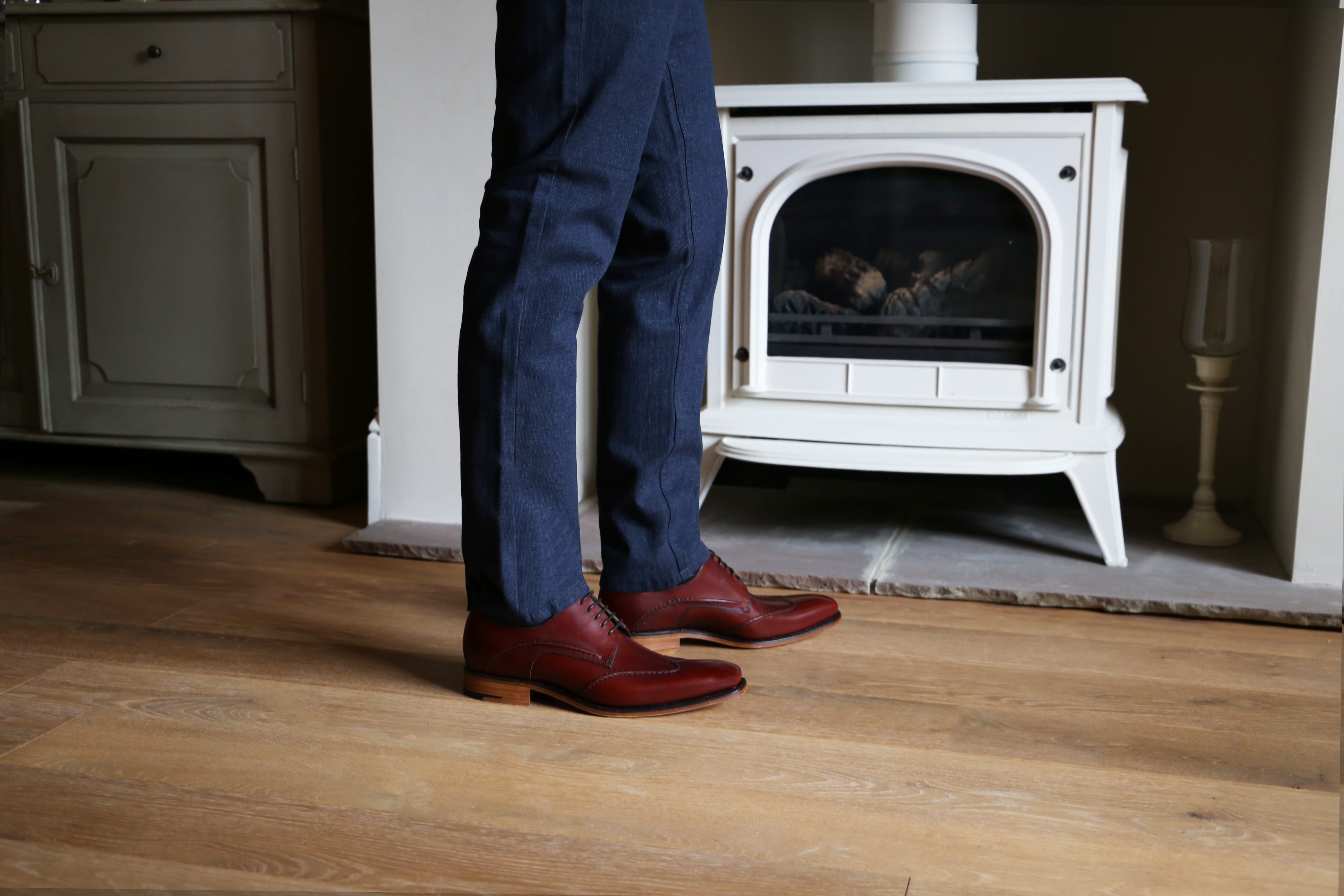
As well as being timeless, the colour you opt for should complement the formalwear in your wardrobe. There is a set number of options you have depending on the colour of your suits. Here’s a guide to help you decide which ones are right for you.
| Suit colour | Shoes that will work |
| · Black
| · Black |
| · Dark grey | · Black
· Burgundy
|
| · Light grey | · Black
· Brown · Burgundy
|
| · Navy | · Black
· Brown · Burgundy
|
The different types of men’s formal shoes
Men’s dress shoes come in a range of styles, which can make the search for a new pair particularly difficult. When choosing the style that suits you best, you should think about what kind of events you typically attend, what your personal style is like, and what you already have in your wardrobe.
To help you along, we’ve put together a list of the most common styles you’re likely to encounter when shopping for a new pair of dress shoes.
Brogues

When someone mentions dress shoes, your mind might jump straight to brogues — a popular go-to for men who like to look put together. They were first created by Scottish and Irish farmers in the 19th century and were primarily designed to be worn while they worked in the fields. Originally, they were produced using black leather, which was perforated so water could drain out of them quickly and easily. In the 1920s they became associated with sports and had a more elegant design, but it wasn’t until the 1930s that they began to properly resemble those that exist today.
They’re a great style of shoe characterised by the decorative perforations used to adorn them. They’re typically constructed from multiple pieces of leather, and work very well for formal occasions. The selection of brogues available is quite extensive, and you can find them with a huge range of different closure and toe-cap combinations. This gives you a lot of freedom to choose a pair that fits your personal style.
Oxfords/Balmorals
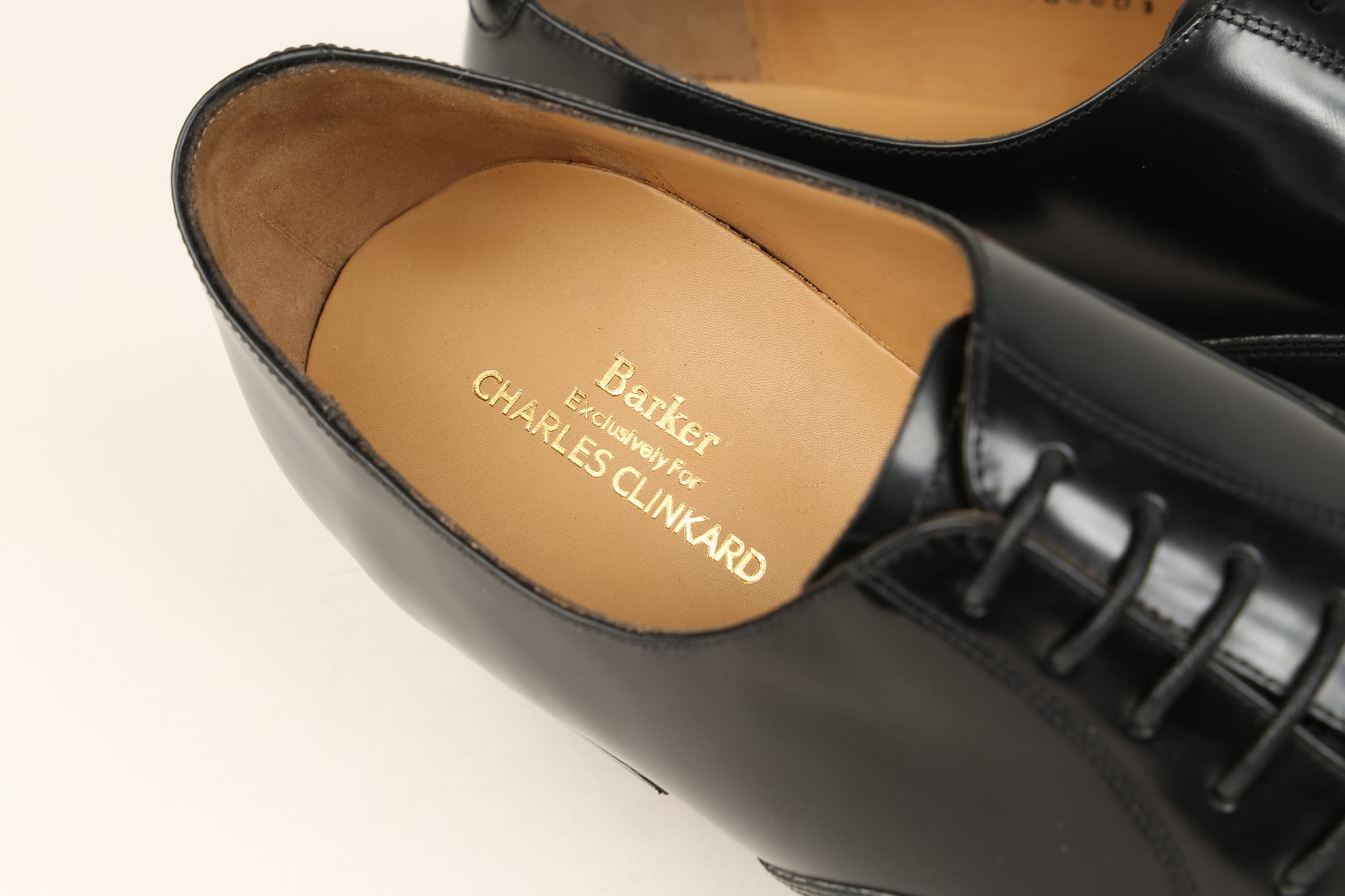
If you’re looking for a fail-safe, timeless style of shoe, Oxfords are perfect. Having first appeared in Scotland and Ireland, they were originally dubbed Balmorals. However, since gaining popularity at Oxford University in the 1800s, they’ve been known as Oxfords.
They’re characterised by their ‘closed lacing’, which means their shoelace eyelet tabs are attached under the vamp (or front of the shoe). Therefore, they look particularly tidy and have a slim silhouette. Their minimalist style and versatility is what make them one of the most popular styles of men’s dress shoes.
They’re a great all-rounder shoe that can be dressed up or down — especially if you opt for a basic brown or black pair. However, if you have a specific purpose for them in mind, you may want to choose a more specialised pair. For example, patent leather Oxfords will work best with a tux.
Derby shoes/Bluchers
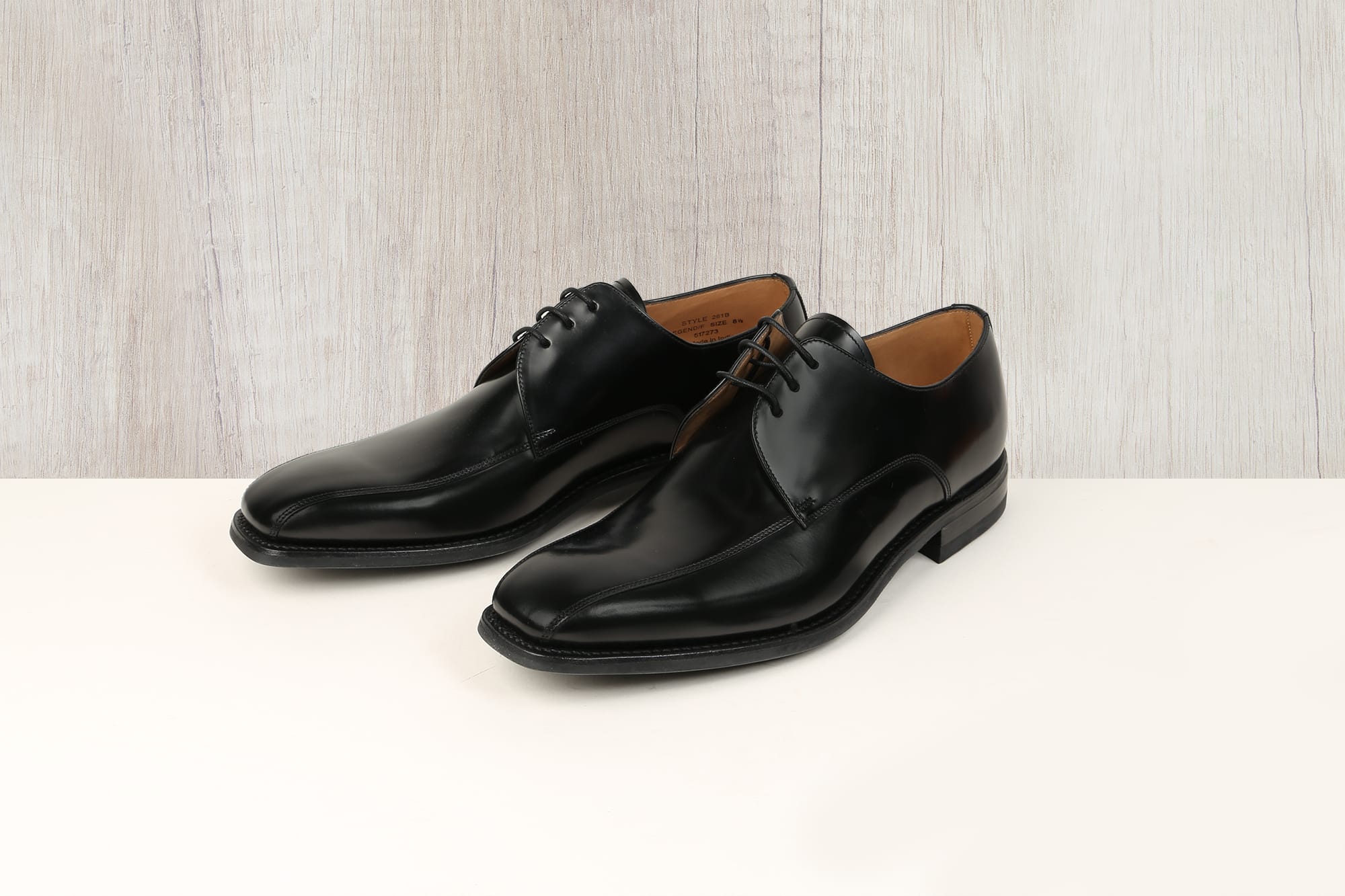
Derby shoes are quite similar to Oxfords, although they have open laces. This means that their facing is stitched on top of the vamp and open at the bottom. As a result, they have a slightly wider fit and tend to be a less formal and more comfortable option.
Derby shoes are available in a huge range of colours, and there are simple styles as well as pairs with intricate brogue designs. This means they’re a great choice if you’re looking for a fashion-forward pair of shoes to add to your work or everyday wardrobe.
Monk straps
Monk straps provide an interesting alternative to traditional lace-up or slip-on shoes. In terms of formality, they sit quite comfortably between Oxford and derby shoes thanks to their bold buckles. Their uniqueness makes them a favourite among fashion-conscious men who are looking for something a little bit different.
If you’re interested in trying out this trend, single monk straps are a great place to start, as they’re more understated. Double straps, on the other hand, tend to exude a military feel, and can be more difficult to pull off.
As the name suggests, monk straps were first worn by monks who wanted closed-toe shoes that offered more protection than their usual sandals. In time, the general public adopted them as dress shoes. They traditionally came with a toe-cap, but are now available in a range of brogue, plain-toe and even boot styles.
Loafers
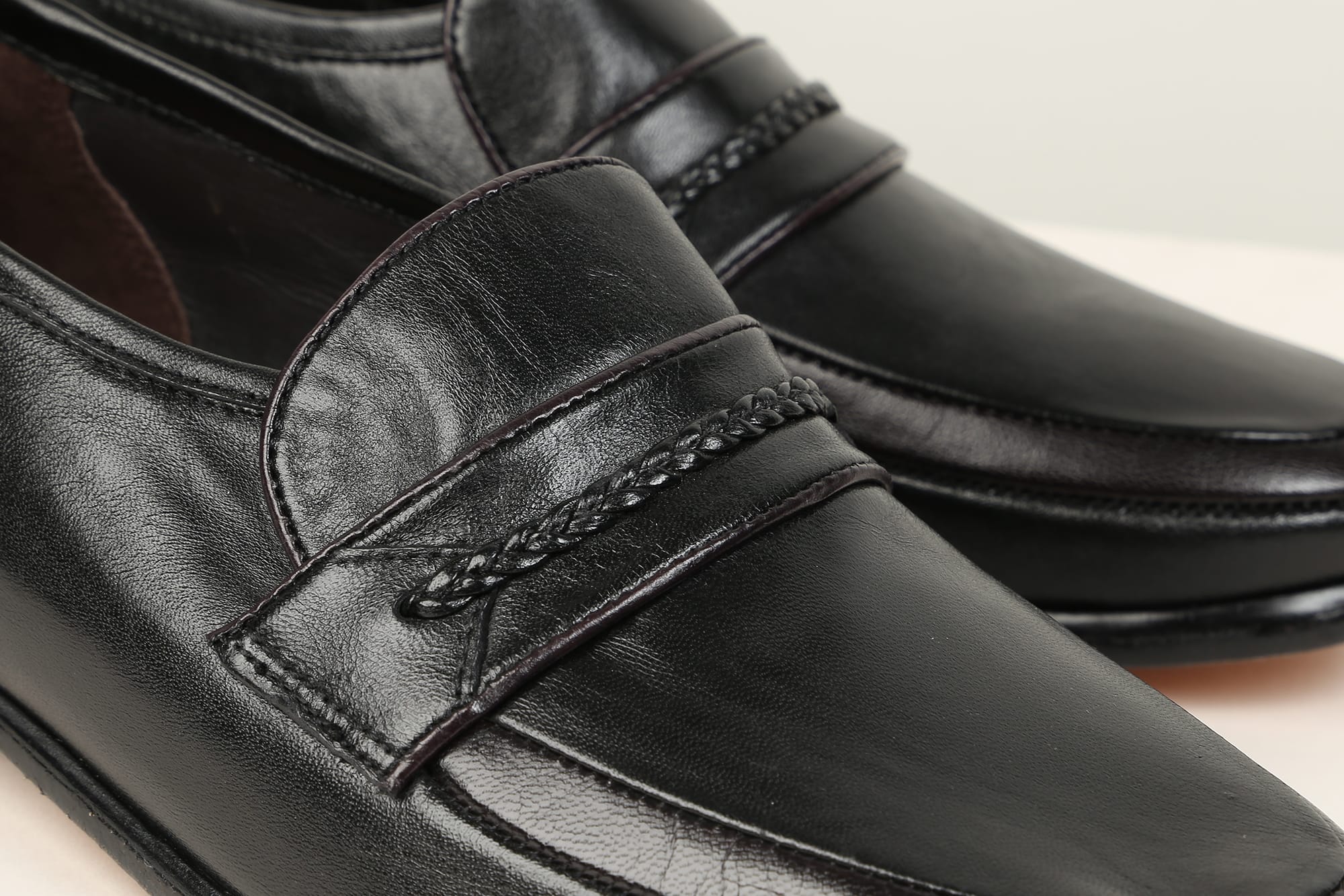
Loafers have a very vibrant history. Originally created as casual house slippers for King George VI, they were only popularised as casual shoes when America began manufacturing them in the 1930s. They didn’t become acceptable dress shoes until the 1960s when American business men began to wear them with their suits. That being said, they certainly offer a more laid back look than the likes of Oxfords and monk straps.
Loafers often feature small decorations, such as a strap with a slit, a metal bit or tassels, so you can choose a design that suits your personal style best.
Opera pumps
While opera pumps aren’t nearly as popular as they were during the Victorian era, they will occasionally be seen on style aficionados at full-dress events.
They tend to be made from patent black leather with a grosgrain ribbon decorating the front of the shoe. Opera pumps are best suited to black- or white-tie events and can work well in place of patent black Oxfords that might be your usual shoes of choice for such occasions.
Dress boots

Generally, dress boots are built similarly to Oxford shoes and often feature wingtip broguing on the toe and along their seams. They’re incredibly versatile and, if you choose a simple black or brown pair, can fulfil a huge range of purposes.
They work particularly well with jeans for smart-casual events, and can even be paired with a suit when bad weather strikes. So, if you’re looking for a nice pair of shoes that can work for a variety of occasions, consider opting for a pair of dress boots.
Chelsea boots
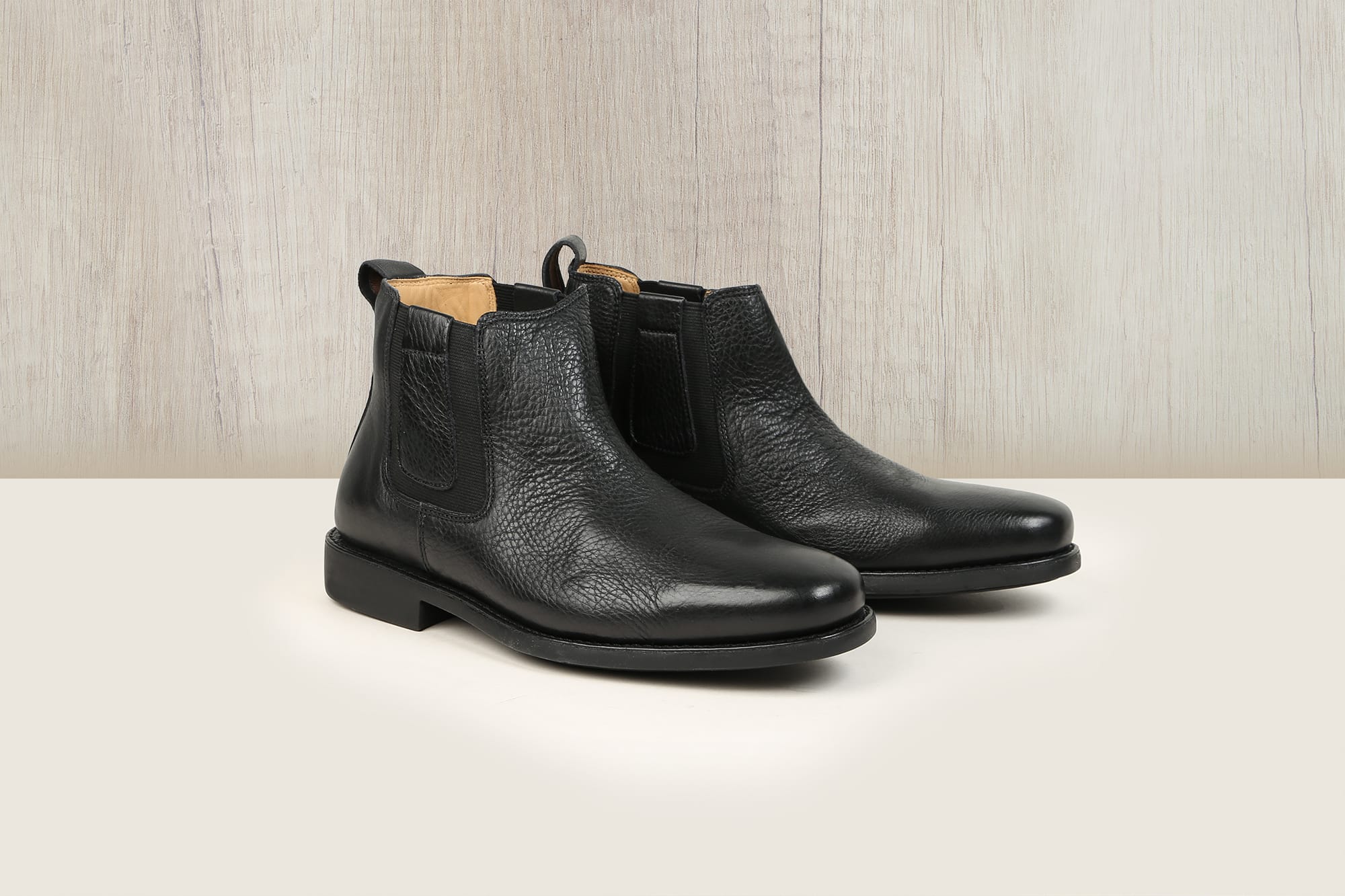
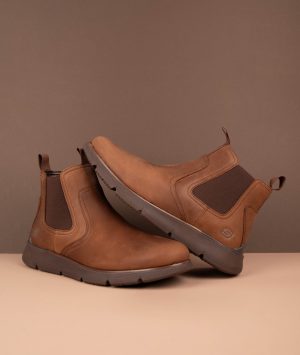
Chelsea boots are a more casual alternative to dress boots, but can still work for some formal occasions. They’re characterised by their elastic side panels and tend to be a particularly stylish and comfortable option.
They were first created by shoemaker J. Sparkes-Hall for Queen Victoria, who apparently wore them day in and day out. They soon became a popular alternative to the more rigid boots typically worn at the time. Chelsea boots enjoyed a modern revival in the 1960s when everyone from the Rolling Stones to The Beatles were seen wearing them. They have been championed by fashion-forward men ever since.
Chukka boots
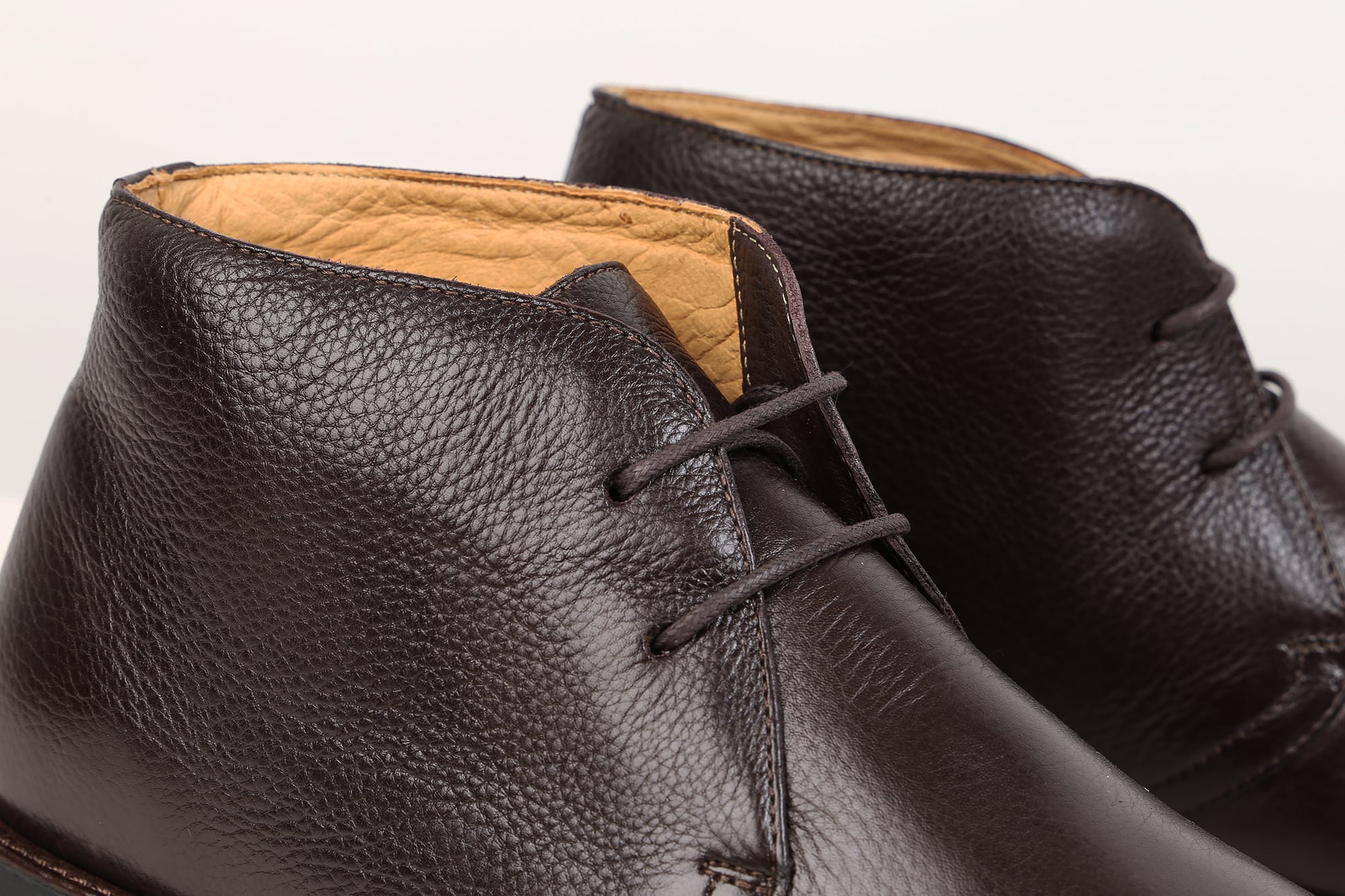
Chukkas are ankle-length boots that fit snugly and, unlike other styles of boot, will not affect how your trousers sit. They have a very simple design, with a rounded toe, minimal stitching, and open lacing similar to that of derby shoes. Typically, they’re made from suede, but polished leather pairs look far more formal.
Though these are the most casual of the dress shoes we’ve described, they work very well in smart-casual situations, and could even serve as everyday work shoes if styled appropriately.
How should I look after my dress shoes?
So, you’ve found the perfect pair of dress shoes and are looking forward to wearing them for the next decade or more. However, even an incredibly high-quality pair of shoes will need regular bouts of TLC in order to look their best for such a long time. So, here are our tips for ensuring that your shoes will last as long as you want them to. At Charles Clinkard, we stock a selection of shoe care products that will be able to help you along the way.
Use shoe trees
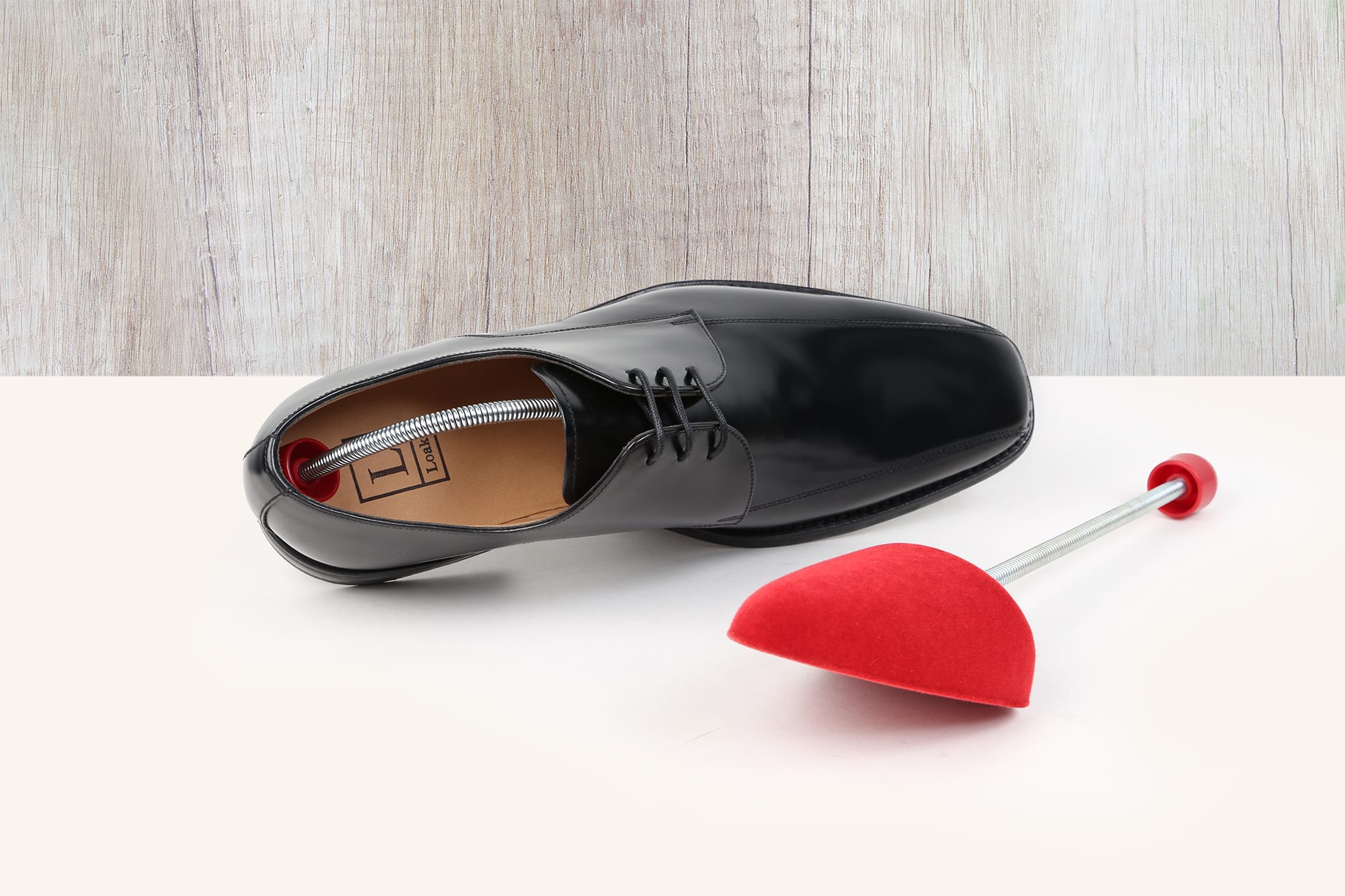
Your feet sweat throughout the day and your shoes will absorb the moisture, which could damage the lining and weaken the leather. A shoe tree will help your footwear to hold its shape as it dries. Plus, the absorbent wood will help to dry out the lining and minimise the damage this causes.
Unfinished cedar models with a split toe and full heel are the best kind, as they ensure the best possible fit and are the most effective at removing moisture.
Polish your shoes
How often you’ll need to polish your shoes will depend on a number of factors, such as how often you wear them and what kind of weather conditions they come up against. It also depends how shiny you would prefer your shoes to be. So, you should polish your shoes whenever they begin to look duller than you would like, or before outing them at a particularly formal occasion.
How do you polish a pair of dress shoes?
Before shining your shoes, you need to put together a shoe polishing kit. This, of course, will need to include shoe polish, which can come in a wax, cream or liquid form. Liquid polishes work well for a quick and easy shine, but waxes and creams are heavier and will do a better job of helping to protect your shoes from water. The colour of your chosen polish should match that of your shoes. You will also need a horsehair brush and a polishing brush or cotton cloth. Once you have all of these things, you can begin the process.
Here are the steps you should follow:
- Cover your workspace with newspaper. You need to protect your furniture and floors, as polishing your shoes can be a very messy job.
- Remove the laces from your shoes so they don’t get damaged.
- Next you need to clean your shoes using a horsehair brush to remove any build-up of dust, salt or dirt that could get trapped underneath the polish. Alternatively, you can use a dampened cloth to wipe over the surface of your shoes, but you’ll need to leave them to dry before continuing.
- Now it’s time to start polishing. Dip your polishing brush or cloth into the polish you’ve picked out, and then work this into your shoes using small circular motions. Try to coat the surface as evenly as possible and pay particular attention to spots that get the most wear, like the toes and heels.
- Each shoe will require 15–20 minutes of drying time. Once they’ve been allowed this, you can add another layer of polish if necessary.
- When every layer of polish has dried, you should remove any excess with your horsehair brush. Again, you should brush quite vigorously, as the heat this generates will help the polish sink into the leather. Once you’ve finished this step, your shoes should have an even finish with a slight shine.
- If you would like to achieve a high shine, you then need to buff your newly-polished shoes with a soft cloth until you’re satisfied with the effect.
Condition your shoes
Many men have never even heard of conditioning their shoes. But, if you’re hoping to make your shoes last as long as possible, you need to condition them before you begin your polishing regime.
You put your shoes through a lot on a daily basis. So, while leather can seem tough, it could dry out, absorb too much water, or be damaged in one of many other ways. A good leather conditioner can nourish and protect your shoes, which should help to prevent them from getting ruined.
You should use a cloth to rub the conditioner into your shoes, and this will develop a slight haze as it dries. Once your shoes have dried completely, you can use another cloth to buff this away.
Get them repaired
If your shoes begin to show signs of wear and tear, you should look to get them repaired as soon as possible. This is because leaving a problem to fester and worsen could result in your shoes becoming irreparable — or, at least, very expensive to repair.
So, if your shoes start to display any signs of stitching coming away, or you think they could benefit from being re-soled, look into getting these problems fixed sooner rather than later.
How to lace up men’s shoes
The best way to lace up your men’s dress shoes will typically depend on they style you’ve invested in.
If you’re going to be wearing Oxfords, you’ll want to have the laces horizontal and parallel. However, if you’re lacing up some more casual footwear, such as derby shoes, the laces should cross over each other. Work from the front of the shoe, towards the back, and try to keep both loose ends a similar length so your shoes are easy to tie and look neat when you’re wearing them.
Terminology
We’ve put together a glossary of all the terms you might come across or want to use when shopping online for a new pair of dress shoes, or talking to a sales assistant instore.
Construction

Cementing
Also referred to as ‘gluing’, cementing is when the upper is attached to the sole using an industrial-strength adhesive. This method is often used in the manufacturing of more affordable shoes and is rarely as long-lasting as welting. It can also make re-soling difficult.
Commando sole
Sometimes dress shoes are fitted with patterned rubber soles for extra grip. These are known as commando soles.
Goodyear welting
This involves stitching a strip of leather, rubber or plastic to the outside of a shoe to attach its sole and upper. The stitching runs along the outside of the shoe, which makes them slightly broader than regularly welted shoes. This method makes shoes relatively easy to re-sole.
Gore
A piece of woven, elastic fabric that is often added to the sides of slip-on shoes to enhance their fit and make them easier to put on and take off.
Leather sole
The most commonly used soles when it comes to making formal dress shoes.
Outsole
The very bottom surface of a shoe, which comes into contact with the ground.
Quarters
The parts of a shoe that begin at the laces and continue to the heel.
Rubber sole
A standard flat sole which is made to look like a classic leather sole, but provides more traction.
Upper
The top of a shoe, which can consist of several parts including foxing, quarters, a toe cap, vamp and saddle.
Vamp
The portion of leather that covers a shoe’s instep and sometimes extends over the toe.
Welting
This is when a strip of material — often leather — is used to attach the sole to a shoe’s upper.
Design
Broguing
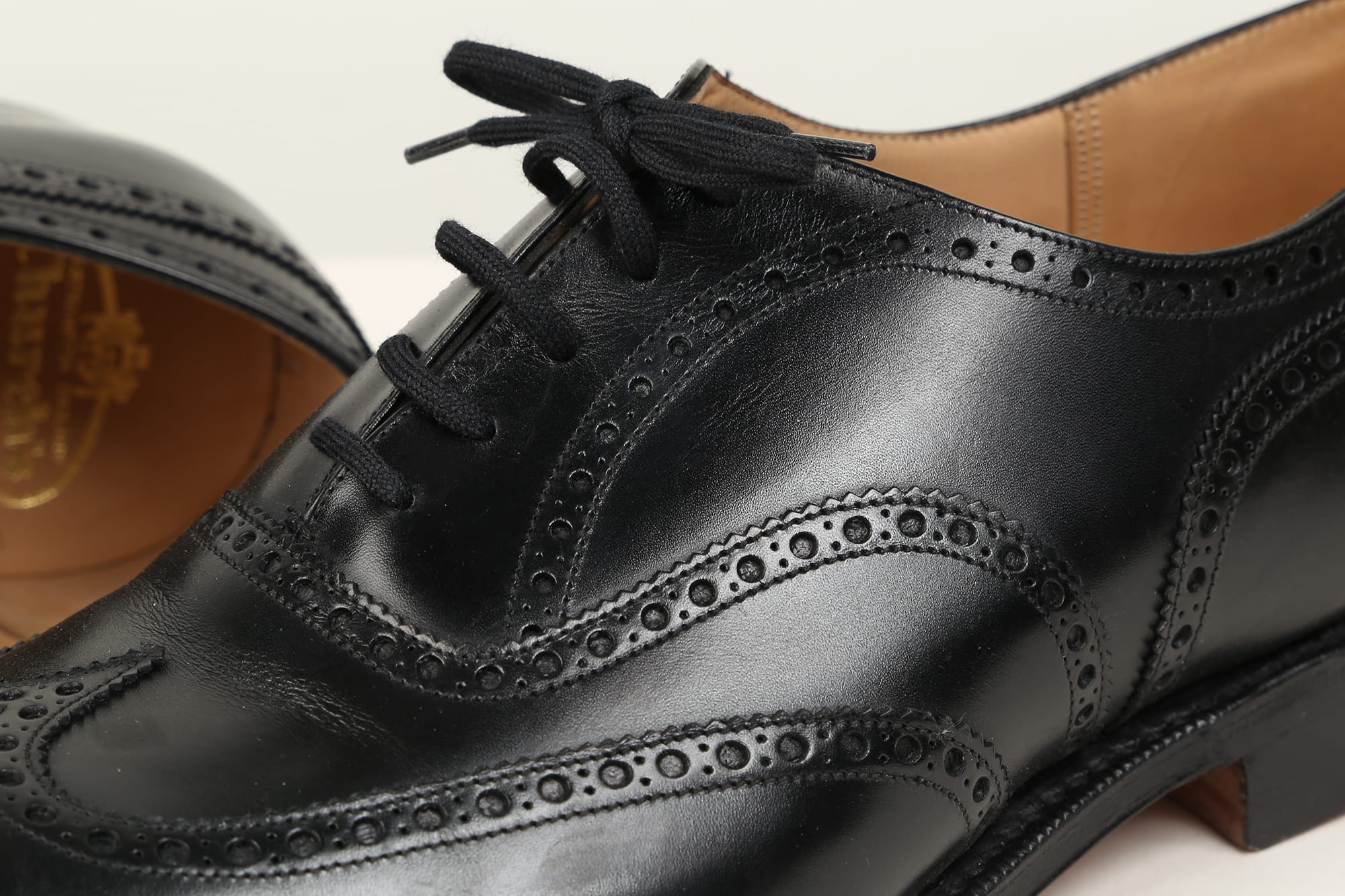
The decorative perforations used to decorate the leather upper of some formal shoes.
Cap-toe
An extra piece of leather that is added to cover a shoe’s toe. Oxfords and derby shoes often have cap-toes.
Kiltie
A piece of decorative, fringed leather that is often attached to the front of loafers.
Lace stay
The part of an Oxford shoe into which the eyelets and laces are inserted.
Medallion
The decorative patterns of perforations that are sometimes found on the toe of certain styles of dress shoe.
Moc-toe
A style of shoe with a seam that goes around its forefront.
Perforations
Small holes that are punched into the upper of a shoe to form a decorative design.
Pinking
Decorative edging that has a saw-toothed design and is sometimes added to the uppers of dress shoes.
Plain-toe
Shoes that have a vamp made of one continuous piece of leather.
Saddle
An extra piece of leather that is sometimes added to dress shoes. It is attached at both sides of the sole and goes over the instep.
Spectator
Oxfords, semi-brogues and brogues that are constructed using two different — and often contrasting — colours.
Tassel
A leather decoration that is often used to adorn the front of loafers.
Wingtip
A style of shoe where the vamp and toe cap are joined together with an ornamental piece of leather shaped somewhat like a wing.
Woven leather
When strips of leather are braided and woven together to create one piece.
So, there you have it: everything you could possibly need to know when shopping for your next pair of dress shoes. Now that you’re suitably prepared, you should feel ready to begin your search., take a look at our selection of men’s shoes and boots, where we’re sure you’ll be able to find a pair that ticks all of the boxes.